


Arbitrage strategy guide
 Arbitrage strategy guide
Best Arbitrage Strategy: Which One Actually Works for You in 2026?
Latency, lock, triangular, statistical, hedge or crypto arbitrage — which one should you trade? This guide explains how each arbitrage strategy works, compares them side by side, and shows what really decides your results: speed, the broker and software that measures every order.

By Alexander Vinsky, Head of Research at Westernpips · About the author
- 6 strategies compared
- 34–56 ms median gap window
- 7-step start plan
- From $100 deposit
What it is
What is an arbitrage strategy, really?
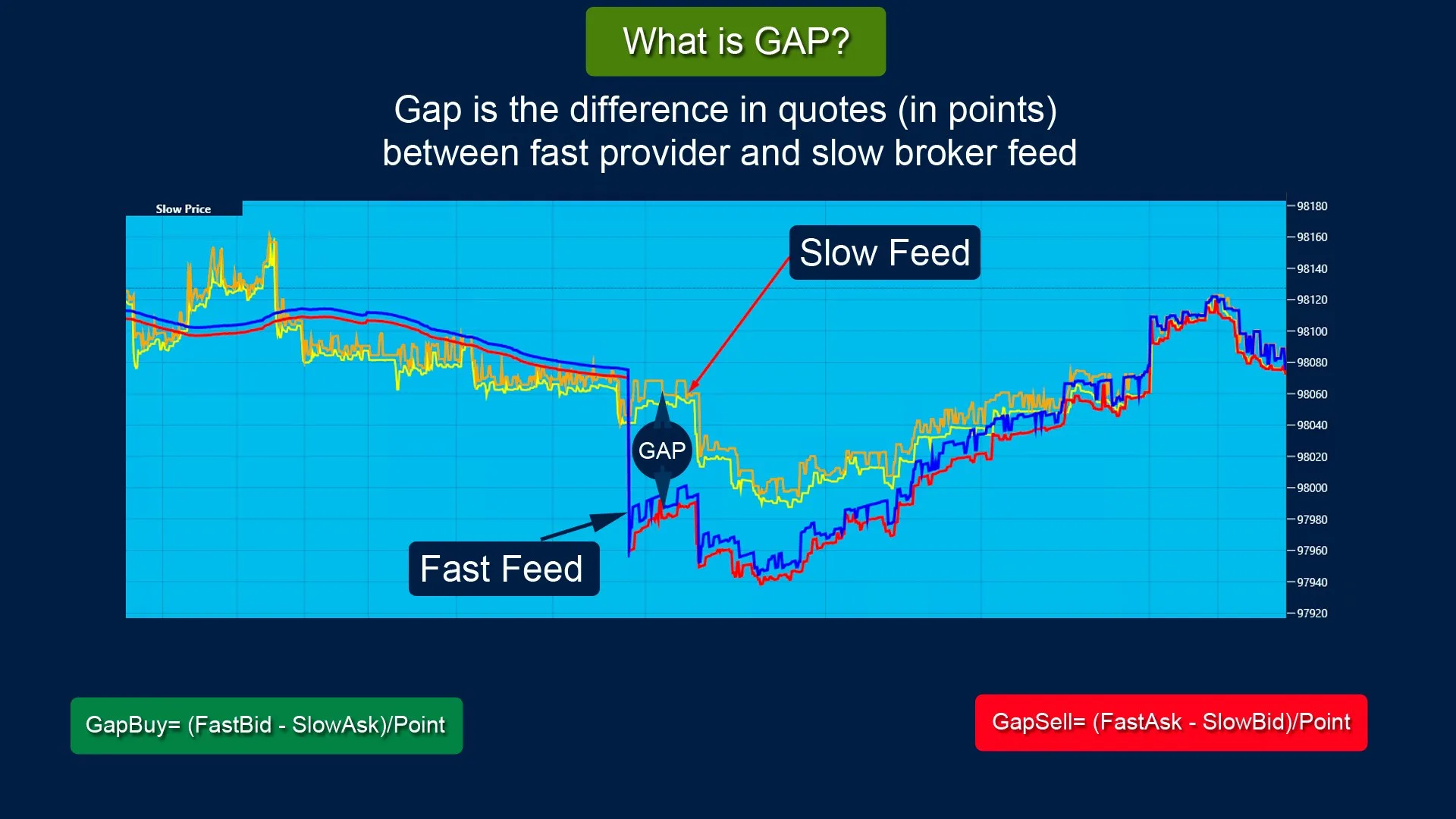
Let’s get one thing out of the way: there is no magic “best arbitrage strategy” that prints money for everyone. The best strategy for you depends on your capital, your broker, your tech setup and how much time you are ready to spend in front of the screen.
The good news? Arbitrage is one of the few trading approaches built on logic rather than guessing. You are not trying to predict where gold will be next Tuesday. You catch a price that is simply wrong for a few milliseconds and trade it before it corrects — like spotting a price tag that has not been updated while the cashier is still walking over with the new sticker.
At its core, arbitrage means profiting from a price difference for the same or a closely related asset in two places at once. In real markets you pay spreads and commissions, prices move while your order travels, and some broker servers are slower than you hope. So a practical arbitrage strategy is a system: it finds the gap, checks that the gap is bigger than all your costs, and executes fast enough to keep most of it.
Why price gaps exist in the first place
Prices are born at large banks and liquidity providers, pass through ECNs and aggregators, and only then reach your retail broker. Every step adds processing time, filters and network distance. A broker built for thousands of clients is not optimised for speed, so its quotes can lag a fast institutional feed by a few milliseconds — sometimes much more during news.
It works like thunder and lightning: the flash (the fast feed) arrives first, the sound (your broker’s quote) a moment later. Arbitrage traders act in that pause. More on where prices come from in Forex quotes explained.
Strategy types
The main types of arbitrage strategies
Latency arbitrage: trading the slow quote
Latency arbitrage is the most common arbitrage strategy in retail Forex and CFD trading. Your software watches a fast price feed and your broker’s price side by side. When the fast feed jumps and the broker has not caught up, you open a trade at the old broker price and close it once the quote catches up.
Why is it so popular? The logic is clean and the signals are frequent. In our study of XAUUSD quotes at three retail brokers, the median stale-quote window was about 34–56 ms. Blink and you would miss it — but software does not blink. The full explanation is in what is latency arbitrage.
One-leg latency arbitrage
The simplest version: you trade only on the slow broker and use the fast feed purely as a signal. It needs one account and very fast execution, and each trade is held briefly. Because some brokers set rules for very short trades, serious traders read the client agreement first and choose a holding time, lot size and trading pace that fit it. In Westernpips Private 7 this is the OneLegMulti family of algorithms.
Two-leg (lock) latency arbitrage
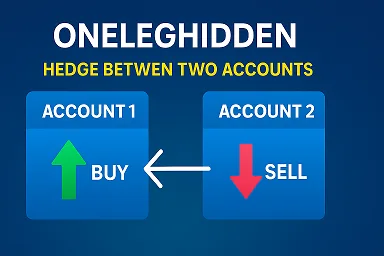
Two-leg or “lock” arbitrage opens a pair of opposite positions — a Buy and a Sell — on one account or across two, and holds them for a set time. The structure looks like ordinary hedged trading and spreads the activity out, so it fits brokers that do not welcome ultra-short trades. In Westernpips Private 7, TwoLegLock and OneLegHidden follow this approach and are built to trade within broker rules. The Remote algorithm runs two accounts on two separate VPS servers, each with its own IP address.
Triangular arbitrage: three pairs, one loop
Triangular arbitrage looks for a mismatch between three related pairs, say EUR/USD, USD/JPY and EUR/JPY. If the cross rate implied by two pairs does not match the third, you trade around the triangle and close the loop at a profit. Elegant on paper — but the gaps are tiny and you pay the spread three times. On a single retail broker the crosses usually come from the same feed, so real triangular gaps are rare. It is more realistic in crypto, where exchanges price pairs independently, although fees and transfer times eat into it.
Statistical arbitrage and pairs trading
Statistical arbitrage does not wait for a clear price error. It watches two instruments that usually move together — two correlated currency pairs, or an index and its futures — and bets on them converging when they drift apart more than usual. Holding times run from minutes to days. The trade-off is real market risk: sometimes the relationship breaks and the gap keeps widening, so stat arb rewards patience and risk control more than raw speed.
Hedge arbitrage across two accounts
Hedge arbitrage uses two broker accounts. When a gap appears between them, you open opposite positions on each and close both when prices realign. Your exposure to the market direction stays small. It suits traders who work with more than one broker and want activity that looks like regular hedging, with each account on its own server close to its broker.
Crypto exchange arbitrage
Crypto markets are fragmented: dozens of exchanges, each with its own order book, so the same coin can trade at different prices on different venues. Arbitrage here can be between exchanges, triangular, or based on funding rates of perpetual futures. The frictions are real — withdrawal fees, network congestion, API limits and funds spread over several exchanges — so it works best with balances pre-positioned on each venue. Westernpips Crypto Trader is in development in our Innovation Lab.
The best one
So, which is the best arbitrage strategy?
Here is the honest answer: for most retail and semi-professional traders in Forex, CFDs and metals, latency arbitrage in its one-leg or two-leg form is the most practical starting point. Signals are frequent, the logic is easy to test, and the tools to run it are mature. That said, “best” depends on your setup.
A quick side-by-side comparison
| Strategy | Speed needed | Accounts | Holding time | Main challenge |
|---|---|---|---|---|
| One-leg latency | Very high | 1 | Seconds | Broker rules on short trades |
| Two-leg / lock | High | 1–2 | Seconds to minutes | Costs on two legs |
| Triangular | Very high | 1+ | Milliseconds | Tiny gaps, triple spread |
| Statistical | Low–medium | 1–2 | Minutes to days | The relationship can break |
| Hedge (two brokers) | High | 2 | Seconds to minutes | Coordinating two servers |
| Crypto exchange | Medium–high | 2+ exchanges | Seconds to minutes | Fees and transfers |
Matching the strategy to your situation
How much capital?
You can open a broker account from about $100, but the licence, VPS and data feed come on top.
How many brokers?
One broker points to one-leg or lock strategies. Two or more open up hedge arbitrage.
How much experience?
Arbitrage software is not set-and-forget. We recommend at least three months of trading, ideally a year.
Can you supervise it?
Be at your screen at least during the European and US sessions and step in when needed.
Small capital, one broker and ready to learn? Start with latency arbitrage on a small live account. Several accounts and a preference for a lower profile? Two-leg and hedge strategies are worth exploring.
What makes it work
What makes any arbitrage strategy work
People underestimate this: the strategy is maybe a third of the result. The rest comes from infrastructure and the broker.
Speed: your VPS and data feed
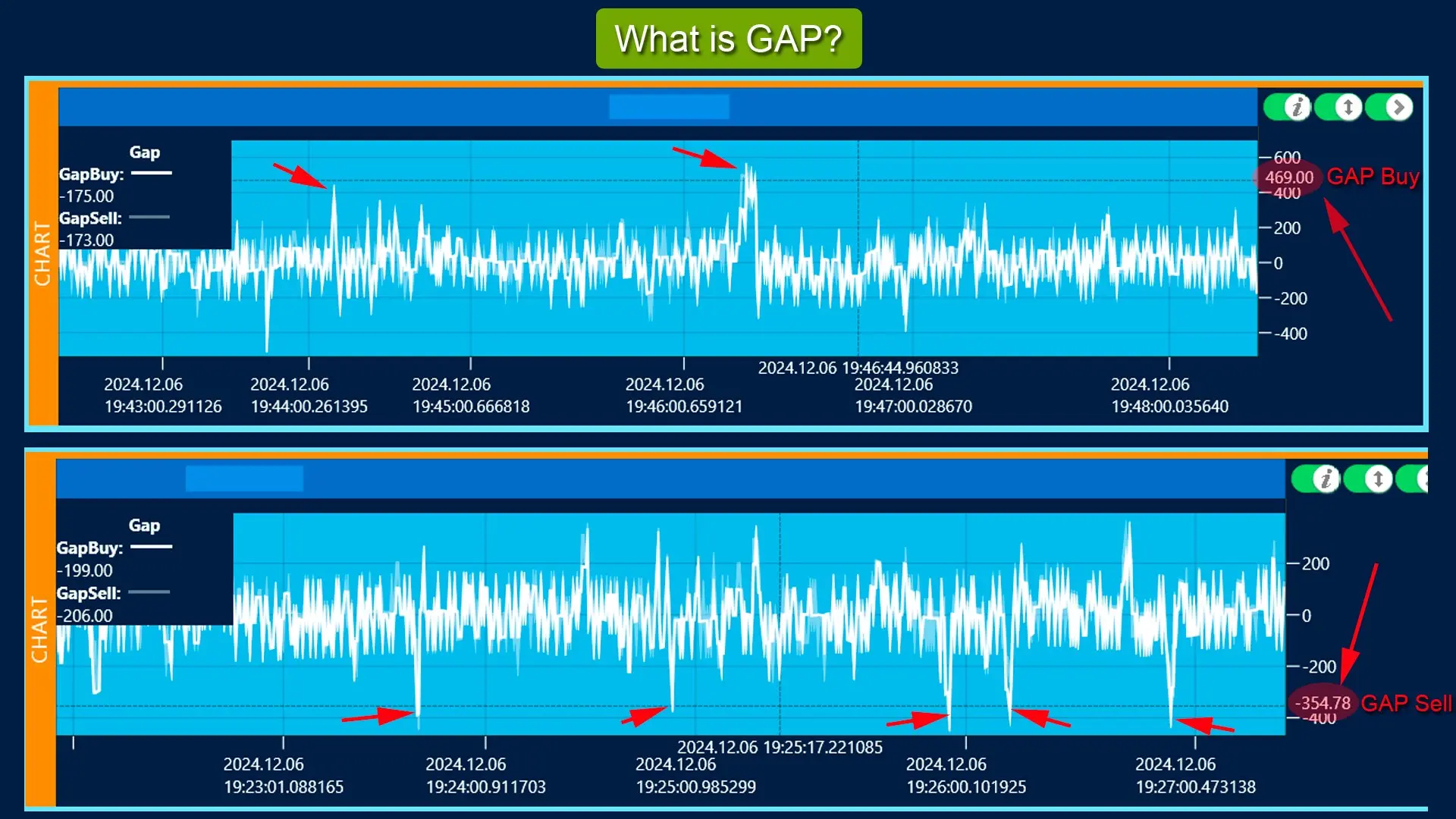
You cannot do latency arbitrage from a home PC: a home connection adds 150–300 ms, longer than most price windows. You need a VPS in the broker’s data centre — usually London LD4, New York NY4 or Tokyo TY3 — and ideally close to both the broker and your fast quote server, or halfway between them. See the Forex VPS guide.
The fast feed matters just as much. If your “fast” price is not actually faster than your broker’s, you are comparing two slow clocks. Westernpips Private 7 comes with 10 built-in fast feeds and also connects to FIX, API and ITCH sources.
The broker: half of your strategy
The same strategy can work beautifully at one broker and fail at another. Look for ECN or STP accounts with fast execution, fair slippage, low costs and clear terms on automated trading. Test with a small deposit for about two weeks and make an early test withdrawal — the broker guide shows how. A practical tip: mix in some manual trades or trades from other strategies. It lowers the share of fast trades on your account and helps you work comfortably within the broker’s rules.
Software that measures everything
Good arbitrage software does more than place trades. It shows the ping to every server, logs the execution time and slippage of every order, and pauses trading when execution gets worse. Without that data you are flying blind. Backtesting on recorded real ticks is a must too: the Westernpips Back Tester lets you compare strategies and settings on your own broker’s data before you risk a cent.
Risk warning. Arbitrage carries risk like any trading. Results depend on the broker, its execution and rules, latency, market conditions and settings, and you can lose money. Past results do not guarantee future returns. Read the Risk Warning.
Mistakes
Common mistakes that kill arbitrage profits
Ignoring costs
A 2-pip gap means nothing if spread, commission and slippage add up to 2.1 pips.
Trading from far away
A VPS on the wrong continent turns every signal into a late order.
Skipping the broker’s terms
Read them before you deposit, not after your first withdrawal request.
Scaling up too fast
Start with minimum lots and grow only when the numbers hold up.
Leaving it unattended
Markets, brokers and connections change. Stay at the wheel.
Chasing one “holy grail” setting
Conditions shift, so review and adjust your settings regularly.
How to start
How to start with the right strategy, step by step
- Learn the mechanics: how gaps form and what eats into them.
- Pick your strategy: for most traders, one-leg or two-leg latency arbitrage.
- Rent a VPS close to your broker and your fast quote source, and measure the ping.
- Choose and test a broker with a small live deposit for about two weeks.
- Record quotes and backtest your settings on real ticks.
- Go live with the minimum lot, watch execution and slippage, and scale up gradually.
- Withdraw regularly and keep reviewing your logs.
The getting-started guide walks through every step in detail, with screenshots of Westernpips Private 7.
Conclusion
Conclusion
So, what is the best arbitrage strategy? For most Forex and CFD traders it is latency arbitrage: simple to understand, rich in signals and supported by mature tools. Two-leg and hedge variants give more flexibility when broker rules or your account setup call for them. Triangular, statistical and crypto arbitrage each have their place, with their own costs and quirks.
In the end no strategy beats good infrastructure, a well-chosen broker and disciplined supervision. Get those right, start small, measure everything and let the numbers guide you. With a clear plan and the right tools, arbitrage can be a structured, logical way to trade the markets.
Watch: strategies and gaps on video

Westernpips new algorithms: Strategy Back Tester
How the Back Tester replays recorded ticks so you can compare algorithms and parameters before trading live.

Westernpips Private 7 Analyser and BackTester guide
Test OneLegMulti, OneLegHidden, TwoLegStandard and other strategies on real recorded quotes with simulated slippage.

What are gap and slippage in latency arbitrage?
The gap is the difference between the fast feed and the broker quote; slippage is the difference between the requested and the filled price.
Head of Research at Westernpips. He works on Westernpips Private 7 and its BackTester and studies how long price gaps between fast feeds and broker quotes really last. The numbers in this guide on delays, broker differences and testing come from that work.
His working paper How Long Do Stale Quotes Last? measured stale-quote windows on XAUUSD at three retail brokers: median 34–56 ms, with the result depending on the broker and the order delay. It is a vendor study on our own recordings, with the full method published so anyone can repeat it.
Published on: SSRN · SocArXiv (OSF) · Zenodo · Code on GitHub
Profiles: Author page · ORCID · Google Scholar · SSRN · OSF

Software for every arbitrage strategy
Westernpips Private 7
HFT latency arbitrage software: a multi-terminal that connects fast data feeds, finds the moments when the broker price lags and trades them in milliseconds. One-leg, two-leg, lock, hedge and Remote algorithms with a Back Tester on real ticks.
- Fast data feeds and direct TCP, FIX and API connections
- Many broker accounts from one multi-terminal
- Built-in Back Tester on recorded ticks
- Lifetime licence, free updates and 24/7 support
from $777 lifetime licence · one-time payment
What is the most profitable arbitrage strategy?
No strategy is profitable for everyone: results depend on your broker, costs, speed and settings. Latency arbitrage tends to offer the most frequent opportunities in Forex and metals, but it still needs testing on your own setup before you scale up.
Can I do arbitrage trading with a small account?
Yes. Many brokers accept deposits from around $100. The software, VPS and data feed are separate costs, so plan the budget for the whole setup, not just the trading deposit.
Is arbitrage trading legal?
Yes. In most jurisdictions arbitrage is a legal trading strategy, because you trade prices that are already published. Each broker sets its own trading rules, so read the client agreement and choose settings that fit it.
Do I need a VPS for arbitrage?
Yes. Price windows often last only tens of milliseconds, while a home connection adds hundreds. A VPS in your broker’s data centre keeps your delay to a few milliseconds.
Can arbitrage software run on its own?
It automates the trading, but it should not be left unattended. Plan to supervise it during the European and US sessions, watch execution quality and adjust settings as market and broker conditions change.
Which arbitrage strategies does Westernpips Private 7 support?
One-leg latency arbitrage (OneLegMulti), two-leg strategies (TwoLegStandard, TwoLegLock, OneLegHidden), Remote trading on two VPS servers, MultiLegSpread and more — 10+ algorithms with a Back Tester on real ticks.
Try the strategy that fits you with Westernpips Private 7
10+ arbitrage algorithms, fast feeds and a Back Tester on real ticks in one multi-terminal. Our team answers 24/7: Telegram @westernpips, e-mail [email protected] or all official contacts.
Trading Forex, CFDs and crypto involves a high risk of losing money. Read the Risk Warning.


Online Support 24/7
If you have questions about Westernpips Software products please Contact Us.